Half the people who write to us open with "I need a website." About 30 percent of them actually need a landing page. Another 20 percent need both, and didn't know there was a difference.
The two aren't the same product, don't solve the same problem, and shouldn't cost the same. Here is how to work out which one you need before you spend $5,000 to $50,000 on the wrong one.
The difference, in one sentence each
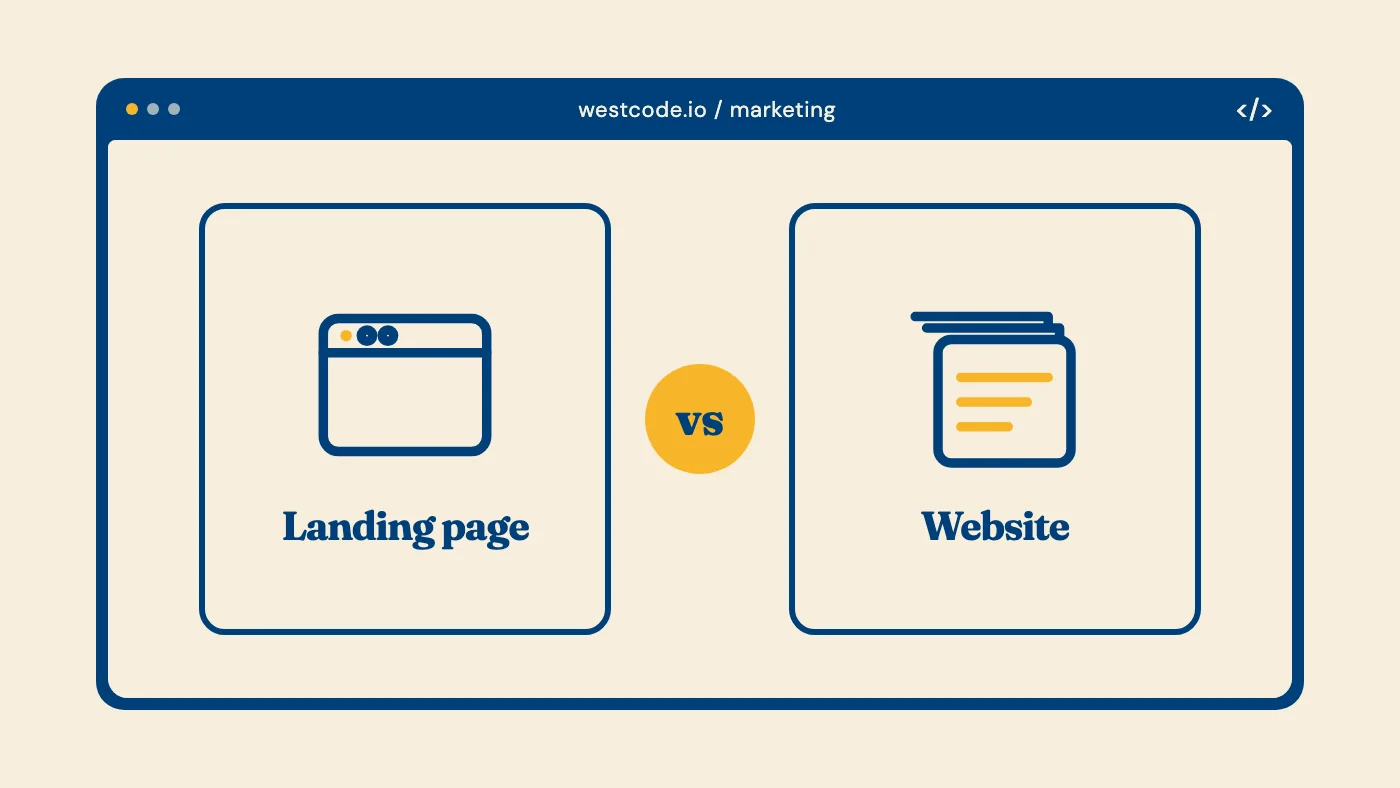
A website is a permanent online home for your business. People who already know your name visit it to learn more.
A landing page is a temporary or campaign-specific page built to convert one specific kind of stranger into one specific kind of lead or customer.
A website is a brand. A landing page is a fishing rod.
When you need a website
You need a website if:
- People are searching for your business by name (or will be, soon)
- You sell more than one service or product and visitors will want to explore
- You have a physical location and customers need to find you (Google Business + a website is a 2026 minimum)
- You want to rank for non-branded search terms ("Kelowna plumber," "Vernon dentist," "Okanagan moving company") - SEO needs a real website with multiple pages
- You have a blog, content marketing strategy, or want to build long-term organic traffic
- Your business has employees customers care about (an "About" page sometimes earns its keep)
- You need to publish anything legally - privacy policy, terms of service, accessibility statement
The honest cost: $4,000 to $20,000 for a real website that does its job, depending on number of pages, complexity, and copywriting included. We have a full guide on website costs in Canada if you want to dig in.
When you need a landing page
You need a landing page when:
- You are running paid ads (Google, Meta, LinkedIn, TikTok) and need every click to count
- You are launching a single product, service, or offer and want it to convert cold traffic
- You are doing outbound (cold email, LinkedIn outreach) and need a destination URL
- You are testing a new business idea or service before committing to a full site
- You have a specific event, course, webinar, or download to promote
- You want to A/B test headline / CTA / pricing variants quickly
The cost: $1,500 to $8,000 for a focused, converting landing page, depending on whether copy is included and whether it's a one-off or part of a system you'll test against.
The "I need both" cases
The most common situation we encounter: an established business with a website that isn't converting paid traffic well.
Their website is generic, has a navbar with five links, talks about who they are instead of what the visitor wants, and has a contact form 6 scrolls down. Conversion on cold paid traffic: 0.5 to 1.5 percent.
The fix is not to redesign the website (unless it's also bad for organic). The fix is to build a separate landing page for each paid campaign and link the ads there instead of the homepage. Same business, two separate URLs. The website serves brand and SEO. The landing pages serve conversion.
A typical result: the landing page converts at 6 to 14 percent, the website stays at 1 percent, and the business spends the same money but generates 5 to 10 times more qualified leads.
A decision tree
Ask yourself:
- Are you running paid ads right now? If yes → you need a landing page. (You may also need a website, but the landing page is the better first spend.)
- Are you a new business with no online presence? If yes → start with a small website (5-7 pages). Add landing pages when you start paid acquisition.
- Do you have a website that's older than 4 years and your conversion rate is under 2 percent? Build a landing page first, see if conversion lifts. If yes, you have your answer about the website - it needed help, not a full rebuild.
- Are you launching one specific product, service, or offer this quarter? Build a landing page. Don't redesign the whole site for one launch.
- Are you trying to rank on Google for non-branded keywords? You need a website with real SEO infrastructure. A landing page alone will not rank.
Real examples
Captain Plumber - local plumbing business, needed organic visibility, was on page 5 of Google. We built a full website with local SEO, Google Business optimization, and conversion paths. Result: page 1 ranking, 2x calls per month. (Case study here.)
Founder Feast - recurring event series across multiple cities, needed to convert paid + organic traffic into event applications. We built a marketing site with a strong landing page at its center, plus a separate application platform behind it. Different tools for different jobs.
EasyHeadshots.ai - AI SaaS, primarily acquires through paid + programmatic SEO. We built 900+ landing pages (one per city) plus a thin marketing site. The landing pages do the conversion work, the site provides the brand layer.
How we approach it
When you get in touch, the first thing we work out together is whether you're buying a landing page or a website. About a third of the time we suggest a smaller, cheaper landing page when someone expected to pay for a full site. Sometimes we suggest both. Sometimes a redesign of what you already have beats starting over.
Whatever the answer, the work should match the job. If you're unsure which one you're looking at, we're glad to talk it through.