Before choosing a developer or a framework, decide what the first version of your app must let someone do. A short, testable plan makes the next conversation more useful than a long list of screens.
This guide is for Kelowna and Okanagan businesses planning a first app. For our services and project examples, visit app development in Kelowna. For budgeting, use our mobile app cost guide.
1. Choose the user and the recurring task
Start with one sentence: “This helps [person] do [task] when [situation].” Be specific enough that you could watch someone use it.
For Captain Plumber, the public website and the team’s app have different jobs. A customer needs to find the right plumbing service. Someone on the team needs access to clients, billing and service reports. Combining those audiences into one feature list would make the brief harder to understand.
Ask a few intended users to walk through the task as they do it today. Record the steps, interruptions and information they need. Then decide whether a mobile app, a web tool or an improvement to existing software best fits that task.
2. Describe a complete journey
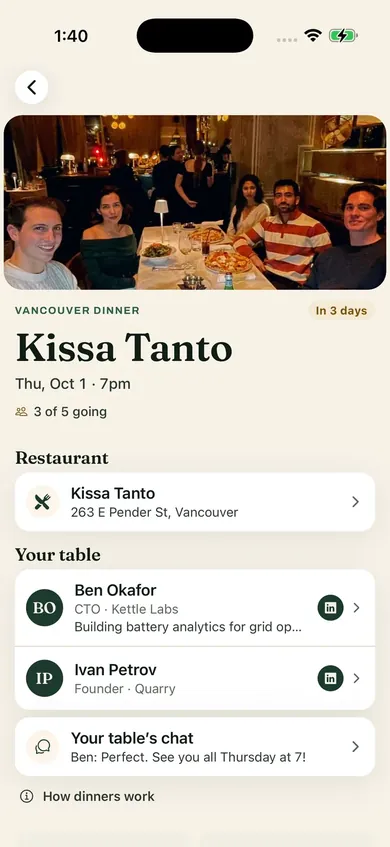
In Founder Feast, discovering a dinner is only the start. A member needs to reserve a seat and find the information for that dinner. The team needs tools to manage the event behind it.
Describe the successful flow and the most likely exceptions. Can someone cancel? What happens when a dinner fills up? Who can correct a reservation? These answers help define the work more precisely than a screen count.
3. Include the person running the product
Every customer action creates an operational question. Who changes a price, approves content, resolves a payment issue or helps a user regain access?
For RetireMint, the visible experience spans assessments, results, learning resources and coaches. The content and rules behind those screens need owners. Write down those responsibilities alongside the app features.
Our guide to mobile apps and admin panels explains why the management side belongs in the initial scope.
4. Agree on milestones you can review
Use working outcomes as milestones. Dates alone do not tell you whether the product is ready.
| Milestone | What you should be able to review |
|---|---|
| Scope | A complete first journey, exclusions and responsibilities |
| Prototype | The main flow and its important states |
| Working build | That flow using the intended backend and integrations |
| Pilot | Feedback from a small group using supported devices |
| Release preparation | Store materials, support process and handover checklist |
Our original Founder Feast build story documents a five-week first platform release. It is one project’s history, not a promise that a full website, mobile app and operational system will always take five weeks. A useful schedule names its assumptions and leaves room for feedback and external dependencies.
5. Prepare for launch before the last week
Decide who owns developer accounts, prepares screenshots, supplies support details and responds to review questions. Apple reviews submissions and asks for product-page and privacy information; Google Play requires app-content declarations and access instructions where needed. Use Apple’s submission guidance and Google’s review checklist when planning the release.
Store submission is a milestone, not a guaranteed public launch date. Plan a pilot and a way to collect issues before inviting everyone.
6. Define what you will learn after release
Choose a small number of questions connected to the job the app does. Can people complete a reservation? Where do assessments stop? Does staff work still require copying information between systems?
Record a baseline before launch where possible. Review completion and support issues alongside downloads, so the next release addresses an observed need.
Turn the plan into a brief
Write a page covering the user, the main journey, exceptions, integrations, operational responsibilities and the result you want to measure. That is enough to start a useful scoping conversation.
If you need help choosing who builds it, read freelancer, agency or studio. If you are ready to plan the work with us, tell us about your app.